Mobile + VR Concept · Archived
Life in the Present
01
Overview
Nearly half of people find it difficult to choose a meaningful gift for someone they care about.
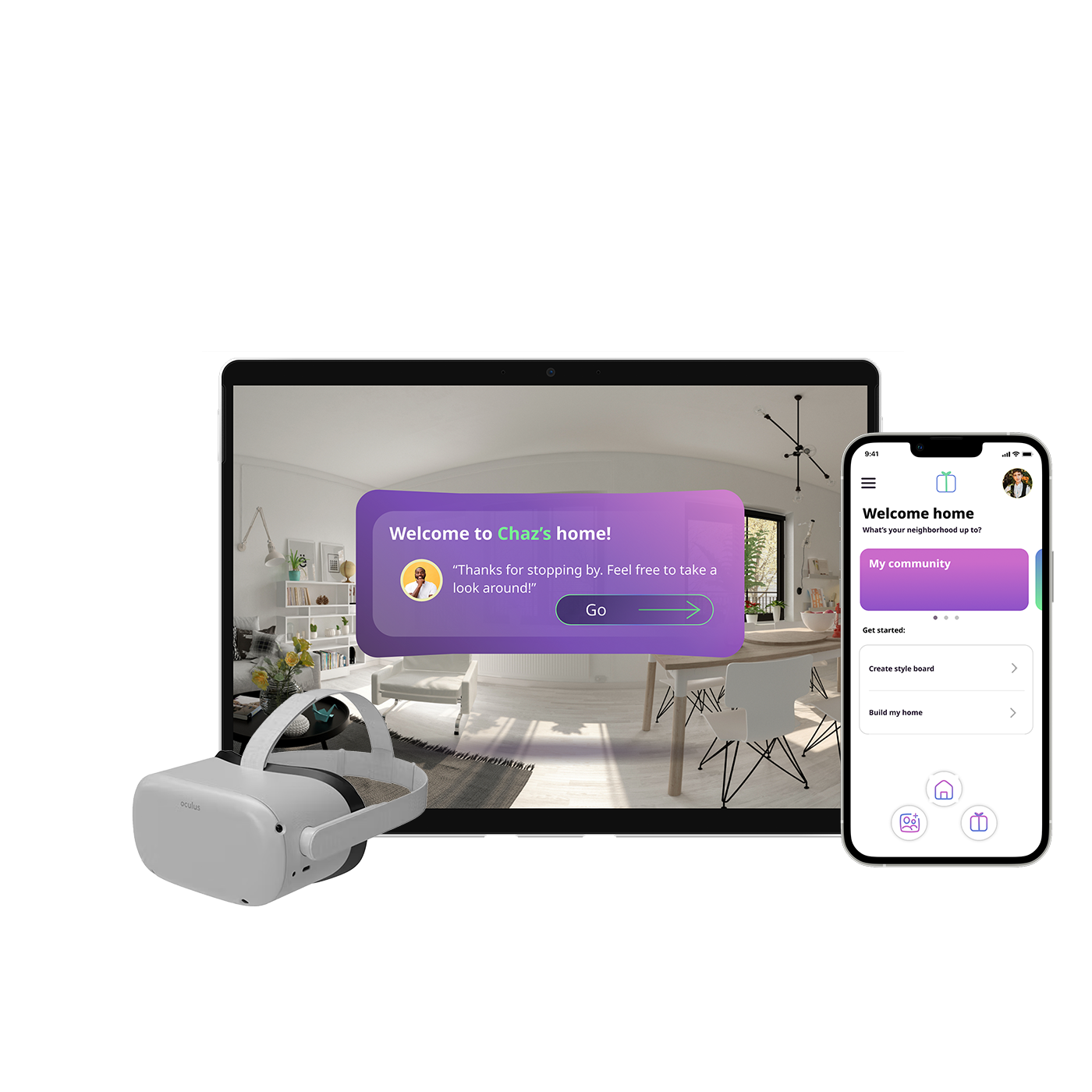
Life in the Present is a concept exploring how VR and mobile could work together to make gift-giving feel more personal. Users build a virtual home that reflects their real style — giving people in their lives a genuine window into their tastes rather than a wishlist.
02
Research
We interviewed 12 people and surveyed 85 participants. The findings pointed in one direction: people want to give thoughtful gifts but don't know enough about the recipient's actual taste. Wishlists feel impersonal. Guessing feels risky.
Users were curious about VR but unfamiliar with it — which meant the concept needed to feel immediately intuitive, not like a technology demo.
03
Design process
The team split into VR and mobile tracks early — a practical call given the three-week timeline. I worked on mobile interface design: splash screens, card carousels, and mood board flows. We mapped three core user experiences — onboarding, exploring a friend's virtual home, and personalizing your own space.
Mid-fidelity prototypes were tested with six users. Feedback centered on navigation clarity and wanting the social features more prominently surfaced. We iterated on visual consistency to unify the VR and mobile sides of the experience.
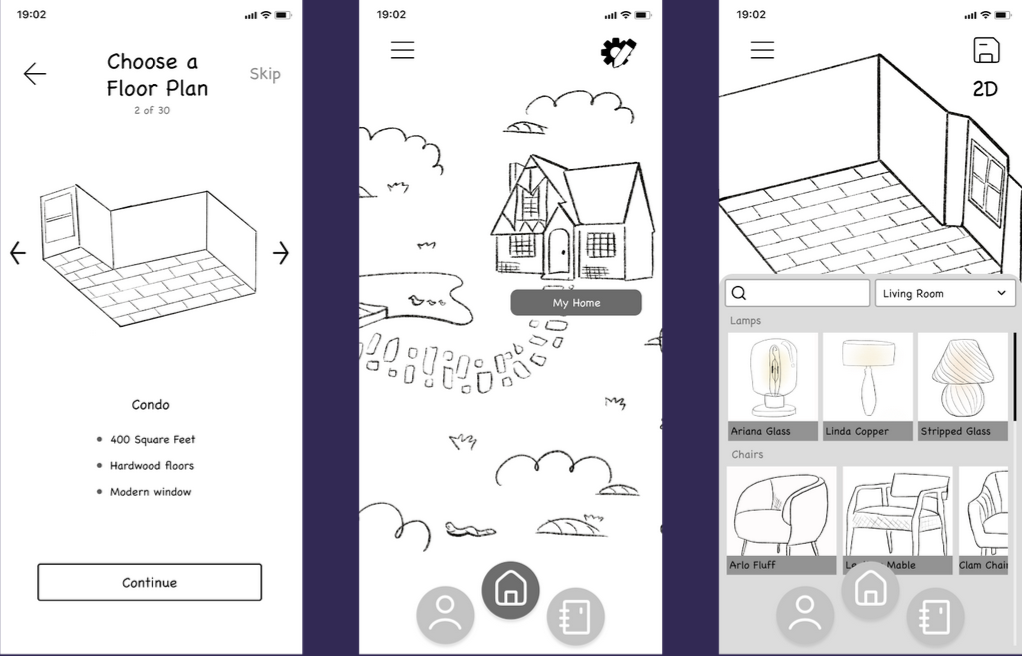
Mobile wireframes — floor plan and home customization flow
04
Outcome
The final prototype delivered a cohesive VR and mobile experience with a unified design language — intuitive home-building customization, streamlined gift discovery, and a clear onboarding flow for users unfamiliar with VR.
Next steps we identified but didn't build: voice commands, AR integration, 3D item visualization, and gamification layers.
Don't let novelty become the product. The technology should disappear.
Also archived